Every culinary adventure begins on a solid foundation, and more often than not, that foundation is a trusty Cutting Board. Far from being a mere kitchen accessory, your cutting board is a vital partner in food preparation, protecting your countertops and, crucially, your knives. But with a dizzying array of materials, styles, and care instructions, how do you pick the perfect one and keep it in top shape? Let’s dive deep into the world of cutting boards, ensuring your kitchen is equipped for both efficiency and impeccable hygiene.
A good cutting board isn’t just about utility; it’s about making your time in the kitchen safer, more enjoyable, and ultimately, more productive. Understanding the nuances of these essential tools can transform your cooking experience from mundane to magnificent.
A Slice of History: The Evolution of the Cutting Board
Our culinary journey with cutting boards dates back thousands of years, long before the days of gleaming stainless steel and high-tech polymers. Imagine our prehistoric ancestors, needing a stable surface to prepare their foraged foods. They likely reached for flat stones or sturdy wooden slabs, laying the groundwork for what would become an indispensable kitchen tool.
As civilizations blossomed, so did the sophistication of our tools. Ancient Egyptians, Greeks, and Romans utilized stone and large wooden planks, prioritizing durability and accessibility. Wood quickly became the material of choice, celebrated for its natural resilience and ease of carving. Fast forward to the Middle Ages, and wooden boards, often crafted from hardwoods like oak and maple, were a staple in European kitchens, becoming more refined as artisan skills grew.
The Industrial Revolution in the 19th century ushered in an era of mass production, making cutting boards widely available to the masses. This period also saw the rise of the formidable butcher block, massive end-grain wood blocks designed to withstand heavy cleavers and intense chopping. The mid-20th century brought another game-changer: the plastic cutting board. Lightweight, easy to clean, and non-porous, plastic quickly gained popularity, particularly for its perceived hygienic benefits. Today, we have a bounty of choices, each with its own story and set of advantages, reflecting centuries of culinary evolution.
Understanding Your Canvas: Types of Cutting Board Materials
Choosing a cutting board often feels like navigating a maze of materials, each promising to be “the best.” The truth is, the “best” cutting board depends entirely on your needs, your cooking style, and your willingness to commit to maintenance.
Wooden Cutting Boards
When you picture a classic cutting board, wood often comes to mind. These beauties are not only aesthetically pleasing but also exceptionally kind to your knives.
Types of Wood and Their Characteristics
- Maple: A hardwood champion, maple is dense, durable, and naturally antibacterial. It’s often the go-to for high-quality cutting boards and butcher blocks.
- Walnut: Known for its rich, dark color and attractive grain, walnut is slightly softer than maple, making it even gentler on knife edges while still being robust.
- Cherry: Softer than maple or walnut, cherry is still a good choice, though it might show knife marks sooner. It’s lighter and often more affordable.
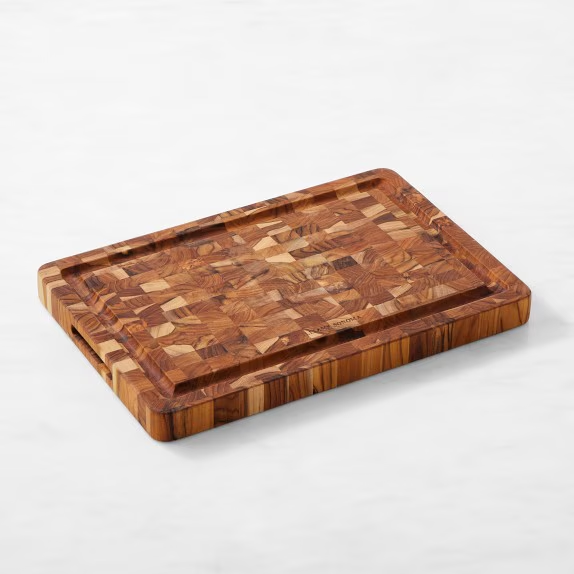
- Teak: A tropical hardwood, teak is naturally rich in oils, making it highly water-resistant and durable, though it can be a bit harder on knives.
- Acacia: Another durable option, acacia is often more affordable than maple or walnut but can be harder on knives due to higher silica content.
Pros of Wooden Boards:
Wooden cutting boards are celebrated for being gentle on knife blades, helping to maintain their sharpness longer. Their natural variations in color and grain make them stunning additions to any kitchen. Moreover, hardwoods like maple and walnut exhibit natural antimicrobial properties, meaning bacteria have a lower survival rate on wood than on plastic. With proper care, a good wooden board can last for decades, becoming a cherished heirloom.
Cons of Wooden Boards:
The main downsides include a higher upfront cost and the need for dedicated maintenance. Wooden boards are not dishwasher safe; the intense heat and prolonged moisture can lead to warping, cracking, and splintering. They are also porous and can absorb stains and odors if not cleaned and oiled regularly.
End-Grain vs. Edge-Grain: A Cut Above
Understanding the construction of a wooden board is key to its performance and longevity:
- Edge-Grain: The most common and often more affordable style, made by gluing strips of wood with the grain running horizontally. These boards are very durable, but the knife edge cuts across the wood fibers, which can dull knives more quickly and show knife marks sooner.
- End-Grain: Considered the crème de la crème, these boards are made by gluing small blocks of wood with the grain running vertically. When you cut on an end-grain board, your knife slides between the wood fibers, which then “heal” back together. This makes them incredibly gentle on knife edges and remarkably self-healing, prolonging the life of both your board and your knives. They are, however, typically more expensive.
Plastic Cutting Boards
Plastic cutting boards burst onto the scene in the mid-20th century, offering a modern alternative to traditional wood.
Pros of Plastic Boards:
Plastic boards are generally more affordable and significantly lighter than their wooden counterparts, making them easy to move and store. Many are dishwasher-safe, offering a convenient, high-heat sanitization option. Their non-porous nature means they don’t absorb stains or odors as readily as wood.
Cons of Plastic Boards:
While initially easy on knives, harder plastics can chip or dull blades over time. The biggest drawback is that plastic surfaces inevitably accumulate scratches and gouges from knife use. These grooves can become breeding grounds for bacteria, and tiny plastic particles (microplastics) can even make their way into your food. Unlike wood, plastic boards cannot be easily resurfaced; once heavily scarred, they need to be replaced for food safety.
Bamboo Cutting Boards
Bamboo offers a sustainable and aesthetically pleasing option that sits somewhere between wood and plastic.
Pros of Bamboo Boards:
As a rapidly renewable grass, bamboo is an eco-friendly choice. It’s harder and less porous than many traditional hardwoods, making it resistant to scarring and less prone to absorbing moisture, which can deter bacterial growth. Bamboo boards are often lightweight yet sturdy.
Cons of Bamboo Boards:
Their hardness, while contributing to durability, can also be a bit rougher on knives compared to softer woods like walnut. Like wooden boards, most bamboo cutting boards require hand-washing and should not be soaked or put in the dishwasher to prevent warping and cracking.
Composite Cutting Boards
Composite boards are typically made from materials like recycled paper or wood fibers bound with a resin.
Pros of Composite Boards:
These boards are often lauded for their durability and eco-friendly construction, frequently utilizing repurposed materials. They can be quite thin, making them easy to store, and many are dishwasher safe.
Cons of Composite Boards:
Similar to bamboo, their dense, hard surface can be tough on knife edges, potentially dulling them faster than traditional wood.
Materials to Avoid (Glass, Marble, Steel)
While attractive as serving platters, materials like glass, marble, or steel are detrimental for actual chopping and slicing. Their extreme hardness will severely dull and even chip your knife blades with every cut, making them entirely unsuitable for food preparation that involves sharp knives. Save these for serving cheese or decorative purposes.
Choosing Your Perfect Partner: How to Select the Right Cutting Board
Selecting the ideal cutting board is less about finding a single “best” option and more about curating a collection that meets your diverse kitchen needs.
Key Considerations:
- Knife Type: If you’ve invested in high-quality knives, prioritize boards that are gentle on blades, like end-grain wood.
- Food Types: Are you often prepping raw meats, or mostly vegetables and bread? This will influence your material choice and the number of boards you need.
- Frequency of Use: For daily chopping, a durable and easy-to-maintain board is essential.
- Kitchen Space & Storage: Consider the size and weight of the board, especially if storage is limited.
- Budget: While pricier boards often offer better longevity and knife protection, there are excellent budget-friendly options too.
“Think of your cutting board as an investment,” advises artisan woodworker, Mark Jensen. “Proper care, especially regular oiling for wooden boards, ensures it not only lasts a lifetime but also performs beautifully.”
The Multi-Board Approach:
Many seasoned cooks and food safety experts advocate for having at least two distinct cutting boards:
- A primary board (often wood or end-grain): For everyday vegetable prep, bread, and cooked foods, prized for its knife-friendliness and aesthetics.
- A secondary board (often plastic): Dedicated exclusively to raw meats, poultry, and seafood. This allows for easier, higher-temperature sanitization (e.g., in a dishwasher) without risking your wooden board. Color-coded plastic boards are a popular and effective way to designate usage, minimizing confusion and enhancing safety.
When choosing, also consider practical features like juice grooves to catch liquids from meats or juicy fruits, and non-slip feet or a grippy surface to ensure stability on your countertop. An unstable board is a dangerous board!
Beyond the Chop: Essential Care and Maintenance Tips
A cutting board is a workhorse, and like any valuable tool, it thrives with proper care. Maintaining your boards not only extends their lifespan but also ensures a hygienic surface for your food.
General Cleaning Practices:
No matter the material, prompt cleaning is paramount. After each use, wash your cutting board with hot, soapy water. Use a sturdy scrub brush or sponge to remove all food particles. The mechanical scrubbing and plenty of water are often more effective than just soap alone. Immediately after washing, rinse thoroughly and dry the board with a clean towel. Then, allow it to air dry completely, ideally standing upright or on a raised rack to ensure airflow to all surfaces, preventing moisture buildup and potential warping.
Wooden & Bamboo Board TLC:
Wooden and bamboo boards require a bit more love, but the effort pays off in longevity and beauty.
Hand-Washing is Key:
Never put wooden or bamboo boards in the dishwasher. The intense heat and prolonged exposure to water will strip natural oils, cause warping, cracking, and even splintering. Similarly, avoid letting them soak in water for extended periods.
The Magic of Mineral Oil and Board Cream:
Wood is porous and can dry out, leading to cracks. This is where food-grade mineral oil comes in.
- Oiling: Apply a generous amount of food-grade mineral oil to all surfaces of your dry board. Let it soak in for several hours, or even overnight, allowing the wood to absorb as much as it can. This replenishment of oils is vital for keeping the wood hydrated and resilient. A good rule of thumb is to oil your board monthly, or whenever it looks dry and lighter in color, and when water no longer beads on the surface.
- Board Cream/Wax: After oiling, a board cream (often a mix of mineral oil and beeswax) can be applied to seal in the moisture and create a protective barrier. Buff it in with a soft cloth. This extra step further protects the wood and gives it a lovely sheen.
Dealing with Stains, Odors, and Scratches:
- Stains: For stubborn stains, a paste made from coarse salt and lemon juice can work wonders. Sprinkle salt on the stain, rub with a lemon half, let it sit, then rinse and dry.
- Odors: White vinegar or lemon juice can neutralize odors. Apply directly, let sit briefly, then wash and dry. Baking soda can also help absorb smells.
- Scratches: Deep knife marks can be lightly sanded out with fine-grit sandpaper (220-400 grit) to restore a smooth surface. After sanding, always re-oil the board.
Plastic Board Practicality:
Plastic boards are often the low-maintenance choice, especially for tasks involving raw proteins.
Dishwasher Benefits:
Most plastic cutting boards are designed to be dishwasher safe, offering the convenience of high-temperature cleaning and sanitization. This is a significant advantage, particularly for boards used with raw meats.
When to Replace a Plastic Board:
Despite their durability, plastic boards don’t last forever. Once the surface becomes excessively scarred with deep cuts and grooves, it’s time to retire them. These crevices can harbor harmful bacteria that even thorough washing may not eliminate, posing a food safety risk.
The Unseen Danger: Food Safety and Preventing Cross-Contamination
While slicing and dicing, it’s easy to overlook an invisible threat: cross-contamination. This silent danger can quickly turn your kitchen into a hazard zone if not properly managed.
What is Cross-Contamination and Why It Matters:
Cross-contamination occurs when bacteria or viruses from one food item, typically raw meat, poultry, or seafood, are transferred to another food that will be eaten raw or without further cooking (like a fresh salad). Pathogens like Salmonella and E. coli can linger on cutting board surfaces, leading to foodborne illnesses if transferred.
“A well-maintained cutting board isn’t just a tool; it’s the unsung hero of a safe and efficient kitchen,” says Chef Anya Sharma, renowned for her sustainable culinary practices.
The Golden Rule: Separate Boards for Different Foods:
To drastically minimize the risk of cross-contamination, the most crucial practice is to use separate cutting boards for different food categories:
- One board for raw meats, poultry, and seafood.
- Another board for fresh produce, bread, and cooked foods.
Using color-coded boards (e.g., red for meat, green for vegetables) is an excellent visual cue, especially in busy kitchens.
Best Practices for Sanitizing:
Beyond washing with hot, soapy water, sanitization provides an extra layer of protection.
- Plastic Boards: After washing, plastic boards can be disinfected with a diluted bleach solution (one tablespoon of unscented liquid chlorine bleach per gallon of water). Flood the surface, let it stand for a few minutes, then rinse thoroughly and air dry.
- Wooden Boards: While wood has natural antimicrobial properties, especially hardwoods, deep grooves can still trap bacteria. For this reason, some food safety experts recommend extra caution and rigorous cleaning if using wood for raw meat. A solution of vinegar and water (1 part vinegar to 2 parts water) can be used as a gentle, yet effective, natural disinfectant for wooden boards. Always dry thoroughly afterwards.
“Many home cooks are surprised to learn that a well-seasoned wooden board can actually be more resistant to bacteria than a heavily scarred plastic one,” remarks Dr. Emily Chen, a food safety specialist. This highlights the importance of maintenance, as heavily grooved plastic boards lose their hygienic advantage.
Recognizing When a Board Needs to Be Retired:
All cutting boards wear out eventually. When any cutting board—be it wood or plastic—develops deep cracks, crevices, chips, or hard-to-clean grooves, it’s time to say goodbye. These imperfections create havens for bacteria that are impossible to eliminate, making the board a food safety risk.
More Than Just Chopping: Other Uses and Considerations
Your cutting board’s utility extends far beyond mere chopping. A beautiful wooden board can double as a stunning serving platter for cheeses, charcuterie, or appetizers, elevating your presentation. Large boards are also excellent surfaces for kneading dough, rolling out pastry, or even as a temporary workspace for various kitchen tasks.
For the environmentally conscious, consider sustainable choices. Bamboo and composite boards made from recycled materials offer greener alternatives. When choosing wooden boards, look for certifications that indicate responsible forestry.
Frequently Asked Questions (FAQ)
Are wooden cutting boards truly more hygienic than plastic?
When properly maintained, yes, especially hardwood boards. Studies suggest bacteria have a lower survival rate on wood due to its porous nature drawing bacteria inward, where they die as the wood dries. However, a heavily grooved plastic board is less hygienic than a well-maintained wooden one.
How often should I oil my wooden cutting board?
Generally, you should oil your wooden cutting board monthly, or whenever it appears dry, lighter in color, or water no longer beads on its surface. Regular oiling prevents cracking and warping.
Can I put my cutting board in the dishwasher?
Plastic and composite cutting boards are often dishwasher-safe. However, wooden and bamboo cutting boards should never be put in the dishwasher, as the high heat and prolonged moisture will cause them to warp, crack, and potentially harbor bacteria.
What’s the best way to remove stubborn stains or odors from a cutting board?
For stains, a paste of coarse salt and lemon juice can be effective. For odors, white vinegar or lemon juice applied directly, allowed to sit briefly, then washed off, can neutralize smells. Baking soda also works well for odor absorption.
When is it time to replace a cutting board?
You should replace any cutting board, regardless of material, when it develops deep cuts, cracks, crevices, or grooves that are difficult to clean. These imperfections can harbor harmful bacteria, posing a food safety risk that even thorough washing can’t eliminate.
Conclusion
The cutting board, a seemingly simple tool, is a cornerstone of every functional kitchen. From its ancient origins as a flat stone to today’s diverse array of materials, it has continually evolved to meet our culinary demands. By understanding the unique characteristics of different materials—be it the knife-friendly elegance of an end-grain wooden board, the convenience of a dishwasher-safe plastic option, or the sustainable appeal of bamboo—you can make informed choices that elevate your cooking experience.
Remember, the longevity and hygienic integrity of your cutting board depend heavily on proper care. Regular cleaning, timely oiling for wood, and knowing when to retire a worn-out board are not just chores; they are essential practices for food safety and culinary enjoyment. So go ahead, choose wisely, care diligently, and let your cutting board be the reliable foundation for countless delicious meals to come. Your kitchen, your knives, and your health will thank you.