Every kitchen, from the bustling professional one to the cozy home space, relies on a trusty cutting board. It’s the silent workhorse, the unsung hero that supports countless culinary creations. But with so many materials out there, how do you choose the right one? Let’s talk about the Hdpe Cutting Board, a truly game-changing material that offers a remarkable blend of hygiene, durability, and practicality, making it an essential tool for any serious cook.
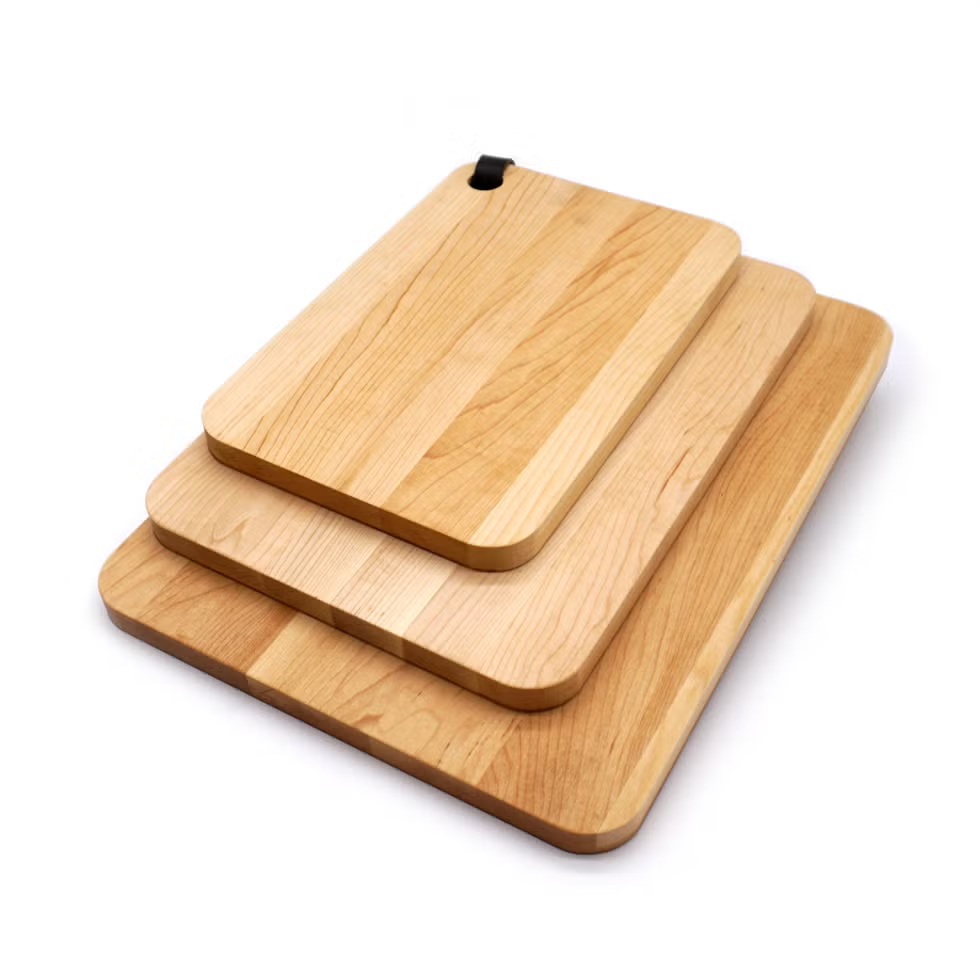
What Exactly is an HDPE Cutting Board?
So, what’s the big deal with HDPE? HDPE stands for High-Density Polyethylene, and it’s a type of plastic specifically engineered for toughness and safety. Imagine long, interlinked molecules forming a super-strong yet surprisingly lightweight material. That’s HDPE for you! This structure gives HDPE cutting boards their impressive strength-to-weight ratio, making them incredibly durable and resistant to common kitchen woes like chipping, cracking, peeling, and warping, even with daily, rigorous use.
The non-porous nature of HDPE is another huge plus. Unlike some other materials, it doesn’t absorb liquids, odors, or — crucially — bacteria. This makes it an ideal choice for food preparation, particularly when dealing with raw meats, poultry, or seafood. Many HDPE cutting boards are even NSF certified, meaning they meet strict public health standards for food safety, a testament to their hygienic superiority.
A Brief History of Cutting Board Materials
For centuries, wood was the undisputed king of cutting surfaces. From thick butcher blocks to simple wooden planks, it was the go-to material. While beloved for its natural beauty and knife-friendliness, wood comes with maintenance demands and can be prone to harboring bacteria if not meticulously cared for. The mid-20th century brought the advent of plastics into the kitchen, offering new possibilities. Early plastic boards had their drawbacks, but advancements in polymer science led to the development of materials like HDPE, which specifically addressed the needs for sanitation, durability, and ease of care in modern cooking environments. This evolution paved the way for the HDPE cutting board to become a cornerstone in both home and commercial kitchens.
Why an HDPE Cutting Board is a Smart Choice
Choosing an HDPE cutting board isn’t just a trend; it’s a practical decision backed by significant advantages that cater to the demands of modern cooking.
Unmatched Hygiene & Food Safety
This is where HDPE truly shines. Its non-porous surface is a formidable barrier against bacterial absorption, a critical factor for preventing foodborne illnesses. Unlike materials that can soak up juices and odors, HDPE repels them. This means you can confidently chop raw chicken and then, after a thorough cleaning, use the same board for vegetables without worrying about cross-contamination.
Cleaning an HDPE cutting board is also a breeze. Most are completely dishwasher safe, handling high temperatures without deforming. For an extra layer of sanitation, the USDA’s Food Safety and Inspection Service (FSIS) even recommends using bleach solutions for plastic boards when handling raw meats, making deep disinfection straightforward and effective. This ease of thorough cleaning makes HDPE an excellent choice for maintaining a healthy kitchen.
Built to Last: Durability You Can Trust
Let’s face it, kitchen tools need to withstand a beating. HDPE cutting boards are built for the long haul. They shrug off impacts, resist chemical cleaners, and aren’t affected by moisture, meaning no warping or cracking over time, common issues with less robust materials. This inherent durability translates to a long lifespan, offering excellent value for money. You won’t be replacing these boards nearly as often as some flimsier alternatives.
Gentle on Knives (Mostly)
There’s a common misconception that all plastic boards are hard on knives. With HDPE cutting boards, the reality is more nuanced. While they are denser and firmer than some very soft woods, they are significantly gentler on your knife edges than materials like glass, stone, or even some harder plastic composites. The polymer composition allows for a slight “give” that cushions the blade, helping to preserve its sharpness longer than harder surfaces. Chef Marcus Thorne, a culinary instructor with decades of experience, notes, “A good quality HDPE board provides that sweet spot – sanitary, sturdy, but still forgiving enough to keep your expensive knives in top condition for daily use.”
Lightweight and User-Friendly
Compared to hefty wooden butcher blocks or fragile glass boards, HDPE cutting boards are remarkably lightweight and easy to manage. This makes them simple to move around your kitchen, whether you’re transferring chopped ingredients to a pot or carrying the board to the sink for cleaning. They’re also often more affordable than premium wood options, making high-quality, safe cutting surfaces accessible to everyone.
How to Choose the Right HDPE Cutting Board
Selecting the perfect HDPE cutting board involves a few key considerations to ensure it meets your specific culinary needs and enhances your kitchen safety.
Size and Thickness Matters
Think about the tasks you’ll be performing. A large, thick board (say, 18×24 inches and an inch thick) is ideal for heavy-duty chopping, carving large roasts, or preparing multiple ingredients. It provides stability and prevents food from spilling over. For smaller tasks like slicing a lemon or dicing an onion, a smaller, thinner board might be more convenient. Thicker boards also tend to last longer and resist warping better.
The Power of Color-Coding
If you’ve ever worked in a commercial kitchen, you’ve likely seen color-coded cutting boards. This isn’t just for aesthetics; it’s a crucial food safety practice. Different colors are designated for different food types (e.g., white for dairy/bakery, green for produce, yellow for raw poultry, blue for raw fish, red for raw meat). Implementing this system in your home kitchen with a set of HDPE cutting boards can dramatically reduce the risk of cross-contamination.
Surface Texture: A Safety Feature
When choosing an HDPE cutting board, pay attention to the surface. Many quality boards feature a slightly textured finish. This isn’t just a design choice; it’s a safety feature. The subtle texture provides friction, helping to keep food from sliding around as you cut, and perhaps more importantly, preventing your knife from slipping unexpectedly. A smooth, highly polished board might look sleek, but it can be a hazard in a busy kitchen.
Keeping Your HDPE Board Pristine: Care and Maintenance
Proper care extends the life of your HDPE cutting board and, more importantly, maintains its hygienic properties.
Daily Cleaning
After each use, especially when handling raw proteins, immediately clean your board. Most HDPE cutting boards are completely dishwasher safe, making cleanup effortless. If handwashing, use hot, soapy water and scrub thoroughly. The non-porous surface means food particles and juices won’t seep in, making surface cleaning highly effective.
Deep Cleaning & Sanitization
For extra peace of mind, especially after cutting raw meat or fish, periodic deep cleaning is recommended. A diluted bleach solution (one tablespoon of unscented liquid chlorine bleach per gallon of water) can be used to sanitize your board. Simply apply, let it sit for a few minutes, then rinse thoroughly with clean water and let it air dry. This ensures any lingering bacteria are eliminated, reinforcing the food safety benefits of your HDPE cutting board.
When to Say Goodbye: Recognizing Wear and Tear
Even the most durable HDPE cutting board won’t last forever. Over time, deep grooves and scratches will inevitably appear from knife blades. These deeper cuts can become difficult to clean completely and might harbor bacteria, compromising the board’s hygienic benefits. It’s crucial to inspect your boards regularly. Once you notice significant, deep scoring, it’s time to replace your HDPE cutting board for the sake of food safety.
Important Note: You might think sanding or resurfacing a scratched HDPE cutting board is a good idea, but it’s not. Attempting to resurface can remove the essential textured surface that prevents knife slips, making the board dangerous. Furthermore, sanding can create even finer, harder-to-clean micro-cuts where bacteria can hide. When your board is deeply scratched, the safest option is always to replace it.
Beyond the Countertop: Other Uses and Considerations
While primarily a kitchen workhorse, the durability and versatility of HDPE cutting boards extend beyond food preparation. Many people repurpose older, clean boards for craft projects, as protective surfaces in garages or workshops, or even as non-slip bases for heavy appliances.
It’s also worth a quick thought on the environmental aspect. While HDPE is a plastic, it’s often recyclable (check local recycling guidelines for specifics on #2 plastics). Choosing a thick, high-quality HDPE cutting board ensures longevity, reducing the frequency of replacement and minimizing waste. When you’re ready to explore options, many reputable brands offer a wide selection of HDPE cutting boards that cater to every cooking style and need.
Frequently Asked Questions about HDPE Cutting Boards
Q: Are HDPE cutting boards dishwasher safe?
A: Yes, the vast majority of HDPE cutting boards are designed to be fully dishwasher safe, making them incredibly convenient for everyday cleaning and sanitization.
Q: Do HDPE cutting boards dull knives?
A: Compared to softer materials like certain woods, a hard plastic like HDPE can slightly dull knives over time. However, it is significantly gentler on blades than harder surfaces like glass or stone, offering a good balance for durability and knife preservation.
Q: How do I deep clean an HDPE cutting board?
A: For deep cleaning, beyond hot soapy water, you can use a diluted bleach solution (one tablespoon of unscented bleach per gallon of water). Apply the solution, let it sit for a few minutes, then rinse thoroughly and air dry.
Q: When should I replace my HDPE cutting board?
A: You should replace your HDPE cutting board when it develops deep grooves or scratches that cannot be thoroughly cleaned, as these can harbor harmful bacteria and compromise food safety.
Q: Are HDPE cutting boards better than wood?
A: It depends on your priorities. HDPE boards excel in hygiene (non-porous, dishwasher safe), durability, and ease of maintenance. Wood boards are often favored for aesthetics and knife-friendliness, but require more diligent care to prevent bacterial growth and warping.
Q: Can I cut raw meat on an HDPE board?
A: Absolutely! HDPE cutting boards are highly recommended for raw meat due to their non-porous surface and ease of sanitization, which are crucial for preventing cross-contamination.
Q: Is HDPE food safe?
A: Yes, High-Density Polyethylene (HDPE) is widely considered a food-safe plastic. Many HDPE boards carry NSF certification, indicating they meet rigorous standards for public health and safety.
Conclusion
In the grand scheme of kitchen essentials, the HDPE cutting board stands out as a true champion. Its inherent non-porous nature provides a superior hygienic surface, making it an indispensable tool for food safety, especially when dealing with raw ingredients. Couple that with its impressive durability, resistance to warping and chipping, and straightforward cleaning, and you have a cutting board that performs reliably day in and day out. Choosing a high-quality HDPE cutting board is an investment in your kitchen’s efficiency, cleanliness, and ultimately, the health of those you cook for. So, why not make the switch or upgrade your current setup? Your knives, your food, and your peace of mind will thank you.