Ever dreamt of extra counter space, a sleek kitchen aesthetic, or a protective cover for your stove? The allure of a “Stove Top Cutting Board” – often known as a noodle board or stove cover – is undeniable. These decorative boards can transform your kitchen, offering a seemingly perfect blend of utility and style. But hold on a moment before you jump on this trend. While visually appealing and seemingly practical, these items carry significant, often overlooked, safety risks that every home cook needs to understand.
This isn’t just about choosing a pretty piece for your kitchen; it’s about making informed decisions that prioritize safety and functionality. We’re here to cut through the confusion, revealing the hidden dangers of stove top covers while guiding you through the world of cutting boards that are genuinely safe, durable, and beneficial for your daily culinary adventures.
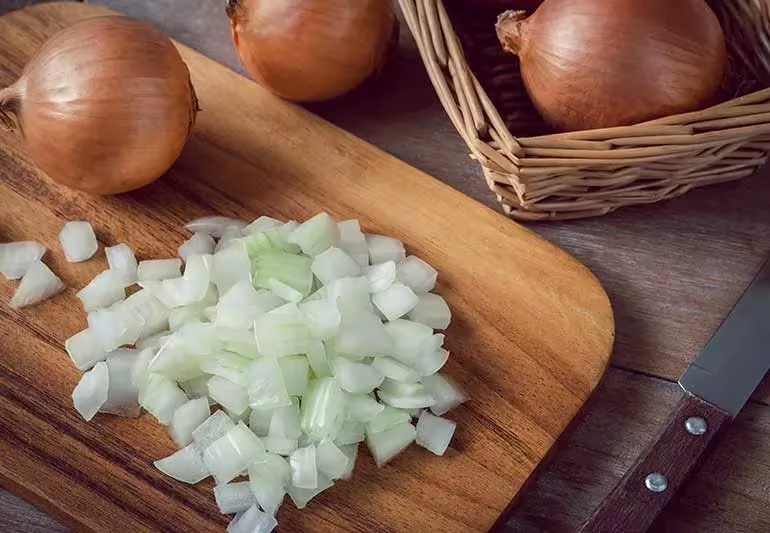
The Allure and The Alarms: Understanding Stove Top Covers (Noodle Boards)
In many kitchens, a stove top cover or “noodle board” is seen as a clever hack for gaining extra surface area or simply making the kitchen look tidier by concealing unsightly burners. Typically made of wood, these boards slide over the entire stove top, providing a flat expanse that can be used for light prep or as a decorative base for kitchen accessories. However, their charm masks a critical safety concern that fire departments across the globe are keen to highlight.
Why They Are Dangerous
The primary danger stems from the placement of a flammable object directly over potential heat sources. It’s alarmingly easy to accidentally turn on a burner, especially on modern touch-control stoves, or for a gas knob to be bumped, initiating a slow gas leak. When a wooden stove top cover is in place, this can lead to catastrophic consequences. The wood, often treated with flammable varnishes or stains, can heat up rapidly and ignite. On gas stoves, the risk is even greater: covering the burners can trap gas underneath the board, creating a hazardous buildup that could result in a fire or even an explosion. The additional counter space these boards offer might also tempt users to store other flammable items on top, further intensifying the potential for disaster should ignition occur.
“John Davies, a seasoned Fire Safety Officer, warns, ‘Placing flammable materials like wooden stove covers over burners is an accident waiting to happen. An accidental turn of a knob can ignite a fire, or worse, lead to a gas buildup with catastrophic consequences, particularly on gas ranges.'”
Given these significant fire and life safety hazards, the recommendation from fire safety experts is clear: do not utilize these types of boards as stove covers. If you need additional counter space, explore other options that don’t involve covering your stove top.
Beyond the Stove: What Makes a Great Cutting Board?
Now that we’ve addressed the critical safety concerns around stove top covers, let’s pivot to what a cutting board is truly designed for: safe, efficient, and hygienic food preparation. A good cutting board is an indispensable kitchen tool, acting as the foundation for much of your culinary work. It needs to be tough enough to withstand repeated knife use, protect your countertops, and, most importantly, help prevent cross-contamination. The right choice preserves your knives, ensures food safety, and even makes your cooking experience more enjoyable.
Key considerations for any cutting board include its material’s impact on knife sharpness, its ability to resist bacteria, its durability, and how easy it is to clean and maintain.
|
Our Picks for the Best Cutting Board in 2026
As an Amazon Associate I earn from qualifying purchases.
|
||
| Num | Product | Action |
|---|---|---|
| 1 | 10pcs Sublimation Cutting Board Blanks, Small Wooden Cutting Boards For Crafts With Handle Mini Charcuterie Boards, Unfinished Wood Tray Small Charcuterie Boards for Christmas Thanksgiving Kitchen |

|
| 2 | Bamboo Cutting Boards for Kitchen [Set of 3] Wood Cutting Board for Chopping Meat, Vegetables, Fruits, Cheese, Knife Friendly Serving Tray with Handles |
|
| 3 | Dishwasher Safe Bamboo Cutting Board, Lightweight & Durable Wood Cutting Board, Reversible with Juice Groove, Easy to Store & Clean, Ideal Kitchen Gift for Home Cooks |
|
| 4 | Double-Sided Stainless Steel Cutting Board for Kitchen, 16\'\'×11\'\' Scratch-Resistant Cutting Board for Meat, Vegetables & Fruits, Rust-Resistant Chopping Board with Juice Groove on Both Sides |
|
| 5 | Bamboo Cutting Board, Durable Wood Cutting Boards for Kitchen with Deep Juice Grooves & Built-in Handles, Ideal Charcuterie & Chopping for Meat, Vegetables and Fruits Ideal Kitchen Gifts |
|
| 6 | Titanium Cutting Board for Kitchen, Cutting Board Double Sided Food Grade, Pure Titanium/PP, Easy to Clean Large Size 15”×10.3” |
|
| 7 | Bamboo Cutting Board, Durable Wood Cutting Boards for Kitchen with Deep Juice Grooves & Built-in Handles, Ideal Charcuterie & Chopping for Meat, Vegetables and Fruits Ideal Kitchen Gifts |
|
| 8 | Kitsure Bamboo Cutting Board - Multi-Sizes Wooden Cutting Boards for Kitchen, Convenient Kitchen Essentials with Deep Juice Grooves, Natural Cutting Board for Chopping & Serving, 15.0\" x 10.0\" |
|
| 9 | GORILLA GRIP BPA-Free Reversible Kitchen Cutting Board Set of 3, US Designed, Nonporous, Juice Grooves Catch Liquid, Slip Resistant Border, Durable Food Chopping Boards, Holiday Prep Essentials, Black |
|
| 10 | Titanium Cutting Board for Kitchen, Cutting Board Double Sided Food Grade, Pure Titanium/PP, Easy to Clean Large Size 15”×10.3” |
|
A Deep Dive into Cutting Board Materials: Pros and Cons
The material of your cutting board significantly impacts its performance, durability, and safety. Each type has a unique set of advantages and drawbacks.
Wood (Maple, Walnut, Teak, and Bamboo)
Wood cutting boards, especially those made from hardwoods like maple or walnut, are beloved by chefs for many reasons. They are naturally beautiful, offer a satisfying feel under the knife, and are generally gentle on knife edges, helping to keep them sharper for longer. Many hardwoods also possess natural antimicrobial properties, which can inhibit bacterial growth. Bamboo, while technically a grass, shares many qualities with wood, being a sustainable and durable option that can resist water and stains when properly cared for.
- Pros: Knife-friendly, aesthetically pleasing, durable, some have natural antimicrobial properties, environmentally friendly (bamboo, responsibly sourced wood).
- Cons: Porous (requires diligent cleaning and regular oiling to prevent bacteria buildup), not dishwasher safe, can be heavy, prone to warping or cracking if not maintained properly.
- Care: Hand wash immediately after use with hot soapy water, dry thoroughly, and regularly oil with food-grade mineral oil to maintain its integrity and hygienic properties.
Plastic (High-Density Polyethylene – HDPE)
Plastic cutting boards are a staple in many kitchens, particularly professional ones, due to their practicality and ease of sanitation. Made from high-density polyethylene (HDPE), these boards are lightweight, inexpensive, and often dishwasher safe, making them incredibly convenient for quick cleaning. They are commonly available in various colors, which is an excellent system for preventing cross-contamination (e.g., green for vegetables, red for raw meat).
- Pros: Highly hygienic (dishwasher safe), lightweight, affordable, excellent for color-coding to prevent cross-contamination, resistant to some knife marks.
- Cons: Can be less gentle on knives over time, prone to deep scratches and grooves that can harbor bacteria (requiring eventual replacement), less environmentally sustainable, can deform or release harmful compounds if exposed to extreme heat.
- Care: Wash with hot soapy water or run through the dishwasher after each use. Replace when deep grooves become visible.
Glass/Ceramic
Glass and ceramic cutting boards stand out for their non-porous nature, making them incredibly hygienic and resistant to stains and odors. They are also heat-resistant, which can be useful as a trivet. Their sleek appearance can add a modern touch to any kitchen.
- Pros: Non-porous, highly hygienic, easy to clean, heat-resistant, resistant to stains and odors, stylish.
- Cons: Extremely hard on knife blades, causing them to dull quickly and potentially chip. Prone to shattering, especially when wet, posing safety hazards. Slippery surface can make precise cutting difficult.
- Care: Easy to clean with soap and water.
Stainless Steel
Stainless steel cutting boards are gaining popularity for their professional-grade performance and ultra-hygienic properties. Being non-porous, they completely resist moisture, stains, and bacteria, making them one of the safest surfaces for food preparation. They are exceptionally durable, heat-resistant, and can last for decades without warping or cracking.
- Pros: Ultra-hygienic, non-porous, highly durable, heat-resistant (great for hot pots and pans), dishwasher safe, easy to maintain, long-lasting, recyclable.
- Cons: Very hard on knife blades, which can dull them quickly. Can be noisy during chopping. May show scratches over time. Can be a breeding ground for bacteria in deep scratches if not cleaned properly.
- Care: Wash with hot soapy water or run through the dishwasher. Regular inspection for damage is recommended.
Choosing Your Perfect Cutting Board: A Practical Guide
Selecting the right cutting board isn’t a one-size-fits-all decision; it depends on your cooking style, priorities, and kitchen environment.
- Consider Your Cooking Style: Do you do a lot of heavy-duty chopping, or mostly light prep? For serious knife work, wood or high-quality plastic will be kinder to your blades.
- Prioritize Food Safety: If preventing cross-contamination is paramount, consider having multiple boards (e.g., a color-coded plastic set) or dedicating specific boards for raw meats and produce.
- Kitchen Space and Aesthetics: Think about storage. Do you prefer a board that can be easily tucked away, or one that makes a statement? Wood often wins on aesthetics, while plastic is more compact.
- Maintenance Commitment: Are you willing to oil a wooden board regularly, or do you prefer the set-it-and-forget-it ease of a dishwasher-safe plastic or stainless steel board?
- Budget: Plastic boards are generally the most economical upfront, while high-quality wood and stainless steel can be a greater initial investment but offer long-term durability.
Maintaining Your Cutting Boards: Best Practices for Longevity and Safety
Proper care extends the life of your cutting boards and, more importantly, safeguards your family’s health.
- Cleaning and Sanitizing: After each use, wash your cutting board thoroughly with hot, soapy water. For plastic and stainless steel boards, a dishwasher cycle is ideal for sanitization. Wooden and bamboo boards must be hand-washed and dried immediately to prevent warping and bacterial growth.
- Oiling Wooden/Bamboo Boards: Regularly oil wooden and bamboo boards with food-grade mineral oil. This prevents them from drying out, cracking, and becoming overly porous, which can harbor bacteria. Depending on frequency of use, this might be weekly or monthly.
- Preventing Cross-Contamination: This is non-negotiable. Always use separate cutting boards for raw meats, poultry, and seafood, and another for vegetables, fruits, and cooked foods. Color-coded plastic boards are excellent for this purpose.
- When to Replace: No cutting board lasts forever. If your plastic board develops deep grooves that are difficult to clean, it’s time to replace it as these can become breeding grounds for pathogens. Wooden boards with deep gouges or significant warping should also be retired.
“According to Dr. Sarah Chen, a specialist in Food Safety and Culinary Hygiene, ‘Maintaining separate cutting boards for raw meats and produce is a cornerstone of kitchen safety. Thorough cleaning with hot soapy water and proper sanitization after each use, regardless of material, is non-negotiable to prevent foodborne illness.'”
Beyond Food Prep: Other Uses for Cutting Boards (Safely!)
While their primary role is food preparation, certain cutting boards can safely serve other functions in your kitchen.
- Serving Platters: Beautiful wooden or slate boards make elegant serving platters for cheeses, charcuterie, or appetizers. Ensure they are thoroughly cleaned and dry before use.
- Trivets: Heat-resistant materials like glass, ceramic, or stainless steel can safely double as trivets to protect your countertops from hot pots and pans. Never use wooden or plastic boards as trivets, as they can scorch, melt, or ignite.
FAQ Section
Q: Are stove top cutting boards safe to use?
A: No, stove top cutting boards (also known as noodle boards or stove covers) are generally not safe to use. They pose a significant fire hazard, especially on gas stoves where they can trap gas and lead to explosions or fires if burners are accidentally turned on. Fire safety experts strongly advise against their use.
Q: What’s the best material for a cutting board?
A: The “best” material depends on your needs. Wood is great for knife preservation and aesthetics but requires maintenance. Plastic is hygienic and dishwasher safe, ideal for separating raw foods. Stainless steel offers superior hygiene and durability, while glass is heat-resistant but hard on knives. Many kitchens benefit from having a few different types.
Q: How do I prevent cross-contamination in my kitchen?
A: The most effective way is to use separate cutting boards for different food types. Dedicate one board for raw meats, poultry, and seafood, and another for fruits, vegetables, and cooked items. Thoroughly wash and sanitize boards after each use.
Q: How often should I oil my wooden cutting board?
A: The frequency depends on how often you use and wash your board. A good rule of thumb is to oil it once a month, or whenever the wood starts to look dry and dull. Regular oiling prevents cracking, warping, and makes the board less prone to absorbing moisture and bacteria.
Q: Can I put a hot pot on my cutting board?
A: Only if your cutting board is made of heat-resistant materials like glass, ceramic, or stainless steel. Placing hot pots on wooden or plastic cutting boards can cause scorching, warping, melting, or release harmful chemicals. Always use a proper trivet for hot cookware.
Conclusion
The journey to a safer, more efficient kitchen starts with informed choices, especially when it comes to fundamental tools like cutting boards. While the idea of a “stove top cutting board” might initially seem appealing for its dual purpose of style and space-saving, the undeniable safety risks associated with covering your stove with a flammable object far outweigh any perceived benefits. Prioritizing kitchen safety means foregoing these covers and finding alternative solutions for extra counter space.
Instead, invest in high-quality cutting boards made from appropriate materials like wood, plastic, or stainless steel, each offering unique advantages for different culinary tasks. Understand their care requirements, practice diligent hygiene, and embrace the power of multiple boards to prevent cross-contamination. By making smart, safe choices for your cutting boards, you not only protect your home and loved ones but also elevate your cooking experience, turning every meal preparation into a confident and enjoyable act. Here’s to safe chopping and delicious dishes!